Succeeding in business is often about having a never-give-up attitude, so it should come as no surprise that business leaders who make it to the top aren’t conditioned to pull the plug on projects that aren’t going as expected. Canceling a project can be seen as admitting failure. But in fact, clinging to sunk projects opens the door to true, catastrophic failure. A willingness to kill unsuccessful projects helps organizations remain focused on achieving their strategic goals.
But how do you know when it is time to cancel a project? Is it when fiscal conditions suggest a problem? Or when the project no longer seems to be aligned with the strategic goals of the organization, perhaps because changes in business conditions have forced priorities to change?
A combination of financial and strategic considerations help determine where and how resources are best committed. In turn, this determines if (and when) to consider the discontinuation of an existing project. This will be considered whether a project can maintain “health,” as defined by the organization’s criteria for that project.

The Project Portfolio Governance Model
For a project cancellation process to function smoothly organizations need a sound project portfolio governance model.
Organizations cannot reliably identify projects to divest from until they have the following key attributes:
- Stages and gates are well-defined, broadly adopted, and consistently followed.
- Each project has a detailed project plan or work breakdown structure that is aligned with these well-defined stages and gates.
- There is a rigorous approach to project execution that demands timeliness and accuracy in evaluating key performance indicators (KPIs).
Establishing an effective portfolio governance model within an organization leads to an objective and optimal process for evaluating projects within the portfolio. It also provides ongoing opportunities for the organization to enrich the portfolio with new projects that can better meet organizational goals given changing conditions.
Stages and Gates
An effective portfolio governance model first defines standard stages for each type of project within the portfolio. Stages may include:
- Project Definition
- Project Approval
- Product or System Design
- Build Prototype
- Project Pilot/Test
- Product Scale-up or Deployment
- Product or System Launch
- Support
Clearly pre-defined stages serve as standardized checkpoints a project must reach in order to continue. They need to be tailored to the different categories of projects within the organization, such as new product development, application development, construction management, new business initiative, and Six Sigma implementation.
Key Performance Indicators
Within each of the established stages, the portfolio governance model should then identify KPIs to determine the decision criteria, which act as gates through which a project must pass in order to be permitted to proceed to the next stage. These pre-defined metrics are critical when it is time for executives to make the decision about whether a project should continue, or be stopped if it does meet the pre-defined criteria set for all projects within the portfolio.

This is an opportunity to establish quantitative measurements for definition, approving, planning, analyzing, tracking, revising and reporting on the status of all projects within the enterprise. These clearly-defined metrics may include the following:
- Schedule and budget variances
- Risk, or probability of success
- Return on Investment
- Market fit
- Project priority
- Competitive landscape
- Defect identification and reduction
These KPIs may themselves may be the product of several inputs; for example, Return on Investment may result from tracking metrics like Net Present Value and Internal Rate of Return.
By reviewing project portfolios frequently and evaluating performance based on well-defined key performance indicators at specific checkpoints within each project, the portfolio governance model allows executives to see when a project is misaligned with any of the pre-defined dimensions required for a healthy project to be allowed to continue.
Of course, these indicators will only be as good as the data informing them. A rigorous approach to project execution that delivers credible, up-to-date, and readily accessible project data is a prerequisite to everything in this article. The portfolio governance model works best when executives can make necessary decisions in an environment with accurate real-time information based on the key performance indicators of all active and proposed projects–with confidence and without emotion.
The Decision Makers
Once an organization has the stages and gates in place and objective standards for what project should continue, there still needs to be clearly defined roles for who makes these determinations. A portfolio governance body should meet regularly to review the status of all active projects in the portfolio to make decisions that affect the overall portfolio composition. Additionally, they should ensure existing projects and programs remain aligned with the organization’s strategic goals.
With the timing, standards and decision makers in place, the organization has an impartial means of making a determination that can otherwise be fraught: deciding that a project should be abandoned. The ability to manage risk is improved as project parameters are more concrete, resulting in the ability to eliminate unsuccessful projects and programs earlier in the project’s lifecycle.
But again, the greatest value of an effectively run portfolio governance model is that it allows organizations to properly focus resources efficiently on those projects that are best aligned with the organization’s strategic priorities.


When to Kill an Unsuccessful Project
Clinging to sunk projects opens the door to true, catastrophic failure. A willingness to kill unsuccessful projects helps organizations remain focused on achieving their strategic goals.

Negotiation Skills for Project Managers: How to Deliver on Quality & the Project Management Plan
The best color to describe project management is gray. This post covers the negotiation skills for project managers to negotiate projects.

AI-Enabled Risk Management in Project Management: Where to Start
On paper, many projects have a risk log, a risk register, and risk owners. In practice, those artifacts are often out of date within a week.
New Year, New Leadership—New Offerings
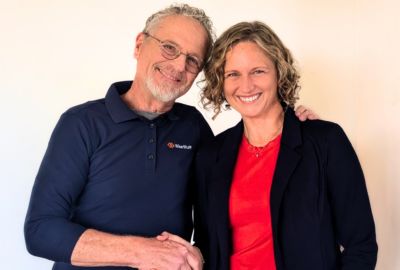
After over 30 years at the helm, Founder and CEO Gus Cicala is stepping into retirement and passing the reins to his daughter, Lisa Cicala.

AI and Project Documentation: A Symbiotic Relationship
AI aids documentation and documentation aids AI. Learn how to fuel this symbiotic relationship.

What Project Management Tools Enable Automation?
While many have embraced the possibility of AI-enabled automation in project management, there are many who don't know how to make that a reality. Here's a look at several tools that can enable your...

Leadership Is Taken, Not Given
Project managers face a paradox: leading without leverage. Read how to navigate this seeming contradiction.

4 Ways to Build a Culture of Project Success
This article was originally published on ReadWrite When people think about the effects of project failure, they usually think of the budget–which is warranted. A PMI survey found that, on average, poor project performance can...